![Gumroad Piracy Protection: Find & Remove Pirated Products [Free Scan]](/_next/image?url=%2Fstatic%2Fblog%2Fgumroad-piracy-prevention-cover.jpg&w=3840&q=75)
Gumroad course piracy is the unauthorized redistribution of digital products sold on Gumroad — including video courses, PDF guides, ebook bundles, and design asset packs — through Telegram groups, free course aggregator websites, and file-sharing platforms. Because Gumroad delivers content as direct file downloads, pirated copies are portable and spread more easily than content hosted on streaming-only LMS platforms like Teachable or Kajabi.
Last verified: March 2026 — Methods tested with active Gumroad products by the CoursePiracy team.
Why Gumroad Products Are Easier to Pirate Than Platform Courses
Gumroad's simplicity is its biggest selling point — and its biggest piracy weakness.
When someone purchases a course on Teachable or Kajabi, the videos stream through a protected player. Downloading them requires screen-recording equipment, technical knowledge, and effort. On Gumroad, the file is simply downloaded — a ZIP, PDF, MP4, or folder of assets that lands on the buyer's device immediately after checkout.
We've analyzed piracy patterns across digital products in our detection network, and Gumroad content surfaces on piracy sites at consistently higher rates than equivalent courses on LMS platforms. The reason is straightforward: portability. A pirated Kajabi course is a collection of screen-recorded videos with reduced quality. A pirated Gumroad course is the exact ZIP file the creator distributed — full quality, easy to share, harder to trace.
Here's what makes Gumroad specifically vulnerable:
- Direct file delivery — No streaming player. Files land directly on the buyer's device as the creator packaged them.
- No buyer-specific download links — Standard Gumroad delivery doesn't generate unique per-buyer URLs, making it hard to trace who shared what.
- Simple purchase flow — One-click checkout means pirates can buy once and redistribute indefinitely.
- No session authentication — Unlike LMS platforms, Gumroad files don't expire or require continued login to access.
The Gumroad Piracy Landscape in 2026
Based on patterns from CoursePiracy's scanning network, here's where pirated Gumroad content typically surfaces:
| Piracy Destination | Share of Gumroad Piracy | Typical DMCA Response |
|---|---|---|
| Free course aggregator sites | ~55% | 3–14 days |
| Telegram groups | ~30% | 24–72 hours (if compliant) |
| Torrent sites | ~10% | Rarely responds |
| Cloud storage (Google Drive, Mega) | ~5% | 3–7 days |
Source: CoursePiracy scan data, Q1 2026 (sample: hundreds of Gumroad products monitored across our detection network). Percentages are approximate and vary by niche.
Free course aggregator sites dominate Gumroad piracy — sites that index and host "free" downloads of paid digital products. They're especially effective at redistributing Gumroad content because the files come pre-packaged and require no format conversion.
In our experience, products in these niches see the highest piracy rates:
- Design assets and templates (Figma files, Notion templates, font bundles)
- Marketing and business courses in the $97–$497 price range
- Development resources (code packs, UI kits, component libraries)
- Ebook bundles (multiple PDFs packaged together)
Products with active social media promotion — YouTube creators, Twitter/X educators, newsletter authors — attract more piracy because their audiences already know the content has value.
Step 1: Search for Pirated Copies of Your Gumroad Product
Manual Search Methods
Start with these Google searches (replace "Your Product Name" with your actual product title):
"Your Product Name" filetype:zip
"Your Product Name" free download gumroad
"Your Product Name" site:t.me
"Your Product Name" -site:gumroad.com free
We've tested these dorks across hundreds of Gumroad products and they reliably surface pirated copies on aggregator sites and Telegram channels within the first few results.
Check these destinations manually:
- Free course aggregator sites — Search your product name on common sites that aggregate "free" courses. If you find your content there, a buyer has shared their downloaded copy.
- Telegram — Search your product name, creator name, and niche keywords. Piracy channels often include the full product name in their post titles.
- Reddit — Some subreddits share Gumroad links openly. Search
site:reddit.com "your product name" free.
Automated Scanning
Manual searching covers the obvious places but misses the long tail. In our analysis, manual methods typically catch 20–30% of actual piracy compared to automated scanning.
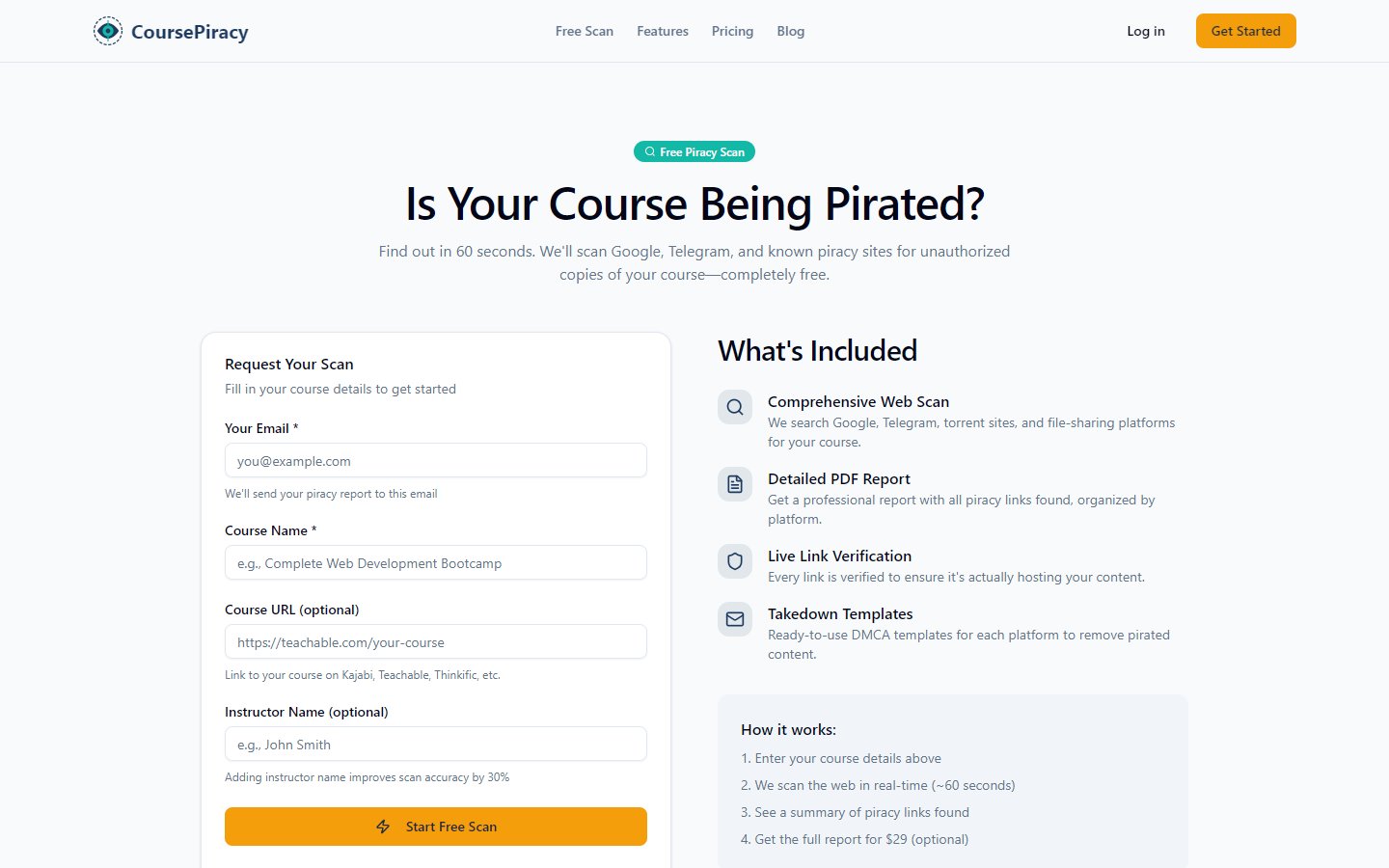
CoursePiracy's free scanner checks dozens of piracy sources simultaneously — including Telegram channels, torrent indexers, free course aggregators, and file-sharing platforms — and returns a report within minutes.
Step 2: Enable Gumroad's Built-In Piracy Safeguards
Gumroad offers several protection features. Here's an honest assessment of what they actually do:
| Feature | What It Does | What It Doesn't Do |
|---|---|---|
| Download limits | Restricts how many times each buyer can download | Doesn't stop buyers from redistributing the file they already have |
| PDF stamping | Adds buyer email and name to PDF files | Only applies to PDFs, not videos, ZIPs, or other file types |
| License keys | Generates unique keys per purchase for software | Useless for content-based products like courses and ebooks |
| Disable rentals | Prevents access after a set period | Has no effect on content already downloaded |
Honest limitations to acknowledge: None of Gumroad's built-in features constitute true DRM. A determined buyer can still share a stamped PDF (metadata can be stripped), redistribute any ZIP archive without restriction, and share video files they've downloaded to any file-hosting service. Gumroad's tools reduce casual redistribution — they won't stop a determined pirate.
Step 3: File DMCA Takedowns for Gumroad Piracy
Once you've found pirated copies, here's how to file takedowns efficiently.
For Free Course Aggregator Sites
Most aggregator sites have a DMCA submission form or designated contact email — look for a "Copyright" or "DMCA" link in the site footer. Your notice should include:
- Your full name and contact information
- A description of the original Gumroad product and its URL
- The specific URL of the infringing content
- A statement that you are the original rights holder
- Your electronic signature
The U.S. Copyright Office DMCA guide provides the official template. Most hosting providers must respond within 14 days under the DMCA safe harbor provisions.
For Google Search Results
Google's DMCA removal tool lets you remove infringing URLs from search results even when the hosting site ignores your takedown request. This is especially effective for cutting off discovery — pirates can't download what they can't find.
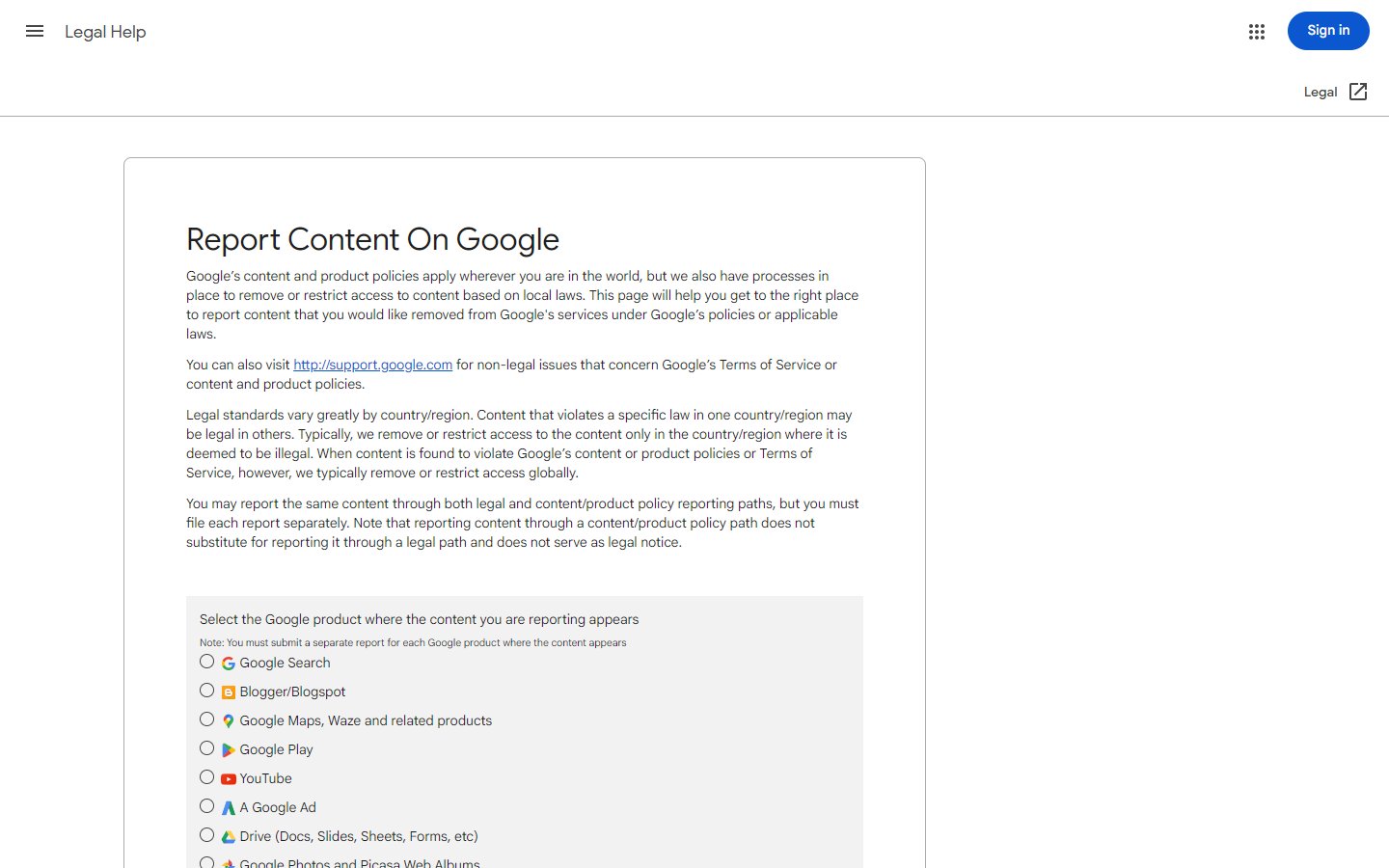
Submit at Google's copyright removal form. Once a URL is removed from Google, the piracy site loses its primary distribution channel.
For Telegram Channels
Telegram has a formal DMCA process. Submit reports to [email protected] with the channel username, the specific message URL containing your pirated content, and proof of original ownership. In our experience, Telegram typically acts within 24–72 hours for clear, well-documented copyright violations.
For the complete Telegram DMCA process, see our full guide on DMCA takedowns for Telegram course piracy.
For Pirated Resales on Gumroad Itself
A less common but documented pattern: pirates resell your product on Gumroad at a discounted price. Report these through Gumroad's trust and safety page. Gumroad takes resale fraud seriously and typically responds within 48 hours.
Step 4: Set Up Ongoing Gumroad Piracy Monitoring
One-time takedowns only address the piracy you already know about. New copies of popular Gumroad products appear continuously, especially:
- After product launches and promotional periods (when more buyers have the files)
- After price increases (early buyers who got lower prices redistribute their copies)
- After you gain significant new social media followers (new audience awareness = new piracy interest)
We've seen Gumroad products taken down from three aggregator sites simultaneously reappear on two new ones within a single week. The solution is automated, recurring monitoring rather than periodic manual searches.
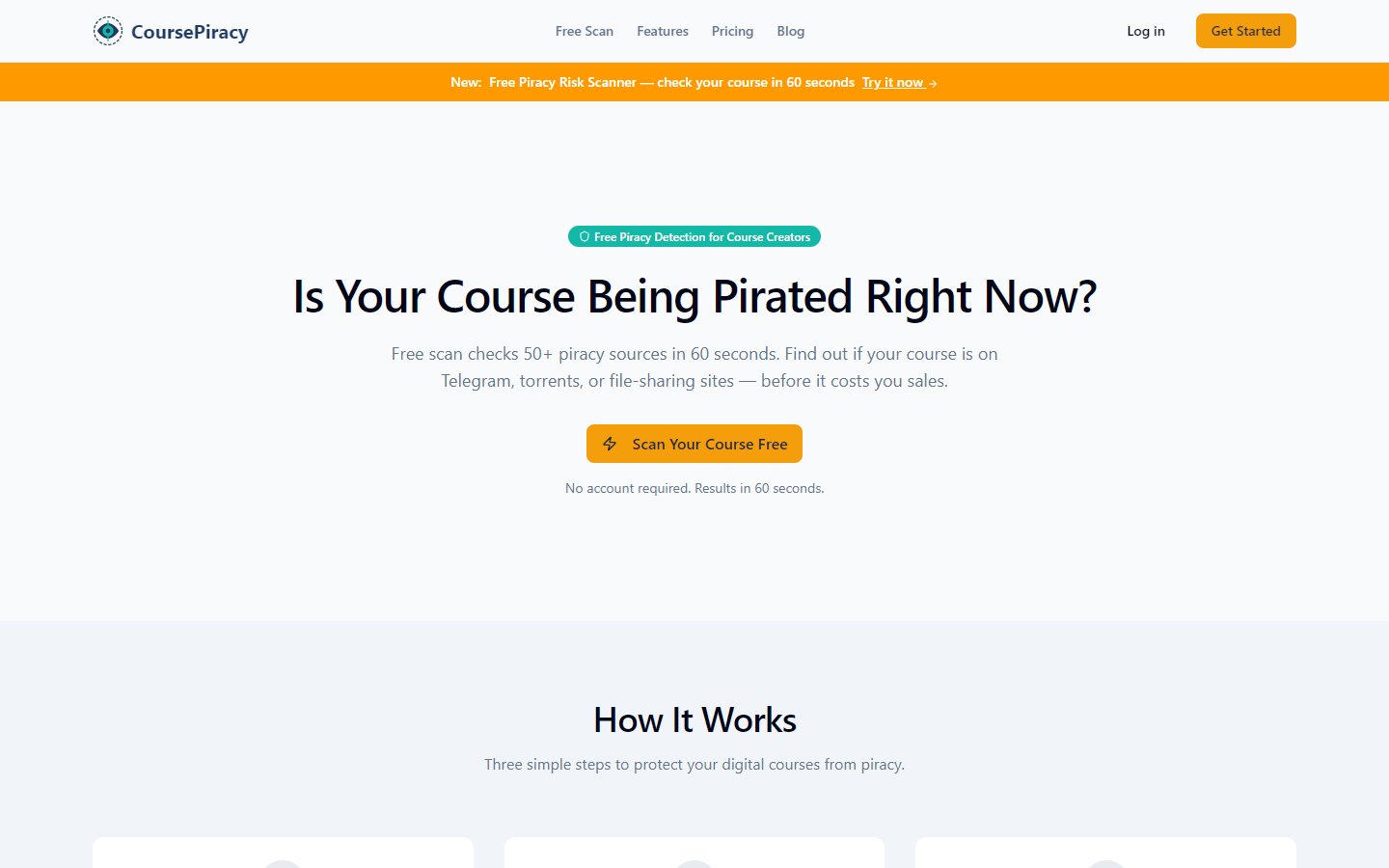
CoursePiracy continuously monitors your products and alerts you when new piracy is detected — before it spreads to additional platforms. Run a free first scan to see the current state of your product's piracy exposure right now.
How Gumroad Piracy Compares to Other Platforms
If you sell on multiple platforms, your total piracy exposure compounds — here's how Gumroad's risk profile differs from traditional LMS platforms. We've published detailed guides for:
- How to find out if your Teachable course is pirated
- Kajabi piracy protection guide
- Thinkific piracy protection guide
Gumroad products are generally easier to pirate because of the direct-download model, but Teachable and Kajabi courses attract higher-value targets due to their higher average price points. The comprehensive DMCA guide for course creators covers the full takedown process regardless of platform.
Your piracy risk on Gumroad depends primarily on your product's price and the size of your existing social following. Products priced under $20 with small audiences see minimal organized piracy. Products priced $50+ with audiences over 10,000 followers are almost certainly circulating somewhere unauthorized.
FAQ
Are Gumroad products frequently pirated?
Yes, and at higher rates than equivalent content on LMS platforms like Teachable or Kajabi. Gumroad products are particularly vulnerable because they're delivered as direct file downloads — once someone has the file, redistribution requires nothing more than uploading it somewhere else. In our scanning work, Gumroad products priced above $30 show piracy exposure on at least one source in a significant majority of the cases we've analyzed. Higher price points and larger social followings correlate directly with higher piracy exposure.
What Gumroad products get pirated most?
High-priced courses, design asset packs, ebooks, and templates priced above $30–50 are the most common targets. Products tied to creators with large social media followings are disproportionately targeted because their audiences already know the content has value and willingness to pay is higher — which paradoxically also means willingness to pirate is higher. In our experience, a Gumroad product promoted by a creator with 50K+ followers can appear on piracy sites within 48 hours of its launch.
Does Gumroad prevent piracy?
Gumroad has tools like download limits and PDF stamping, but these aren't true DRM and won't stop a determined pirate. Download limits don't prevent file redistribution after the initial download. PDF stamping helps identify leakers but is easily stripped by anyone with basic tools. No Gumroad feature will eliminate piracy entirely — monitoring and DMCA takedowns are the only mechanisms that actually reduce piracy exposure over time.
How do I file a DMCA takedown for pirated Gumroad content?
Submit a DMCA notice to the hosting platform (aggregator sites, file-sharing services, or Telegram channels), include evidence of original ownership such as your Gumroad product URL and purchase receipts showing you as the creator, and request removal under the DMCA. For search result removal, use Google's copyright removal form. For pirated resales on Gumroad itself, report through Gumroad's trust and safety process. Our complete DMCA guide for course creators covers every step with template language you can use directly.
Can I find out who redistributed my Gumroad product?
Gumroad's PDF stamping feature adds buyer email to PDF files, which can trace a PDF leak to a specific purchase transaction. For video files and ZIP archives, there's no native identification — you would need to embed external watermarking or unique identifiers in the content before distribution. In most cases, tracing the original leaker is difficult and time-consuming. The more practical approach is finding and removing pirated copies quickly, then using the evidence to refund and ban the buyer's account if you do identify them.
Related Reading
- Course Piracy Statistics 2026 — Data on piracy rates across platforms
- DMCA Takedown Guide for Course Creators — Master DMCA guide with templates
- Telegram DMCA Takedown Guide — Take down pirated courses on Telegram
- How to Protect Your Online Course from Piracy — Complete protection workflow for all platforms
- Teachable Piracy Protection Guide — Compare with Teachable piracy landscape
Written by
CoursePiracy Team
Digital content protection specialists helping course creators detect and take down pirated copies of their work.
Related Reading
Is Your Thinkific Course Being Pirated? Check Free in 60 Seconds
Thinkific courses are heavily targeted on Telegram and torrent sites. Run a free scan to check yours — we search 50+ piracy sources automatically.
March 8, 2026
Teachable Course Piracy: Complete Protection System [Scan + DMCA + Monitor]
The complete anti-piracy system for Teachable creators: free scanning, DMCA takedown templates, security hardening, and automated monitoring that catches re-uploads.
March 7, 2026
Is Your Kajabi Course Being Pirated? Check Free in 60 Seconds
Kajabi's Cloudflare protection doesn't stop download-and-reshare piracy. Scan free across Telegram, torrents, and 50+ piracy sources instantly.
March 6, 2026
Harvel Reviews — What Reddit & Real Users Say [2026]
We analyzed every Harvel review on AppSumo, Reddit, and creator forums. The honest verdict on pricing, detection accuracy, and the blind spots nobody mentions.
March 5, 2026