The Skilled Nursing Facility (SNF) Rounding Framework for Clinicians — Piracy Status
Designed for nurse practitioners and clinicians working in skilled nursing facilities, this $499 Teachable course by EliteNP provides a structured rounding framework for SNF environments. At nearly five hundred dollars, it targets healthcare professionals seeking to improve their clinical workflow and patient outcomes in post-acute care settings. The specialized nature of this content — combining clinical protocols with facility-specific workflows — makes it particularly valuable intellectual property. Piracy of medical education content not only undermines the creator's revenue but can also spread outdated or incomplete clinical guidance, posing real patient safety concerns. A piracy scan is currently pending for this course, meaning its exposure status remains unknown.
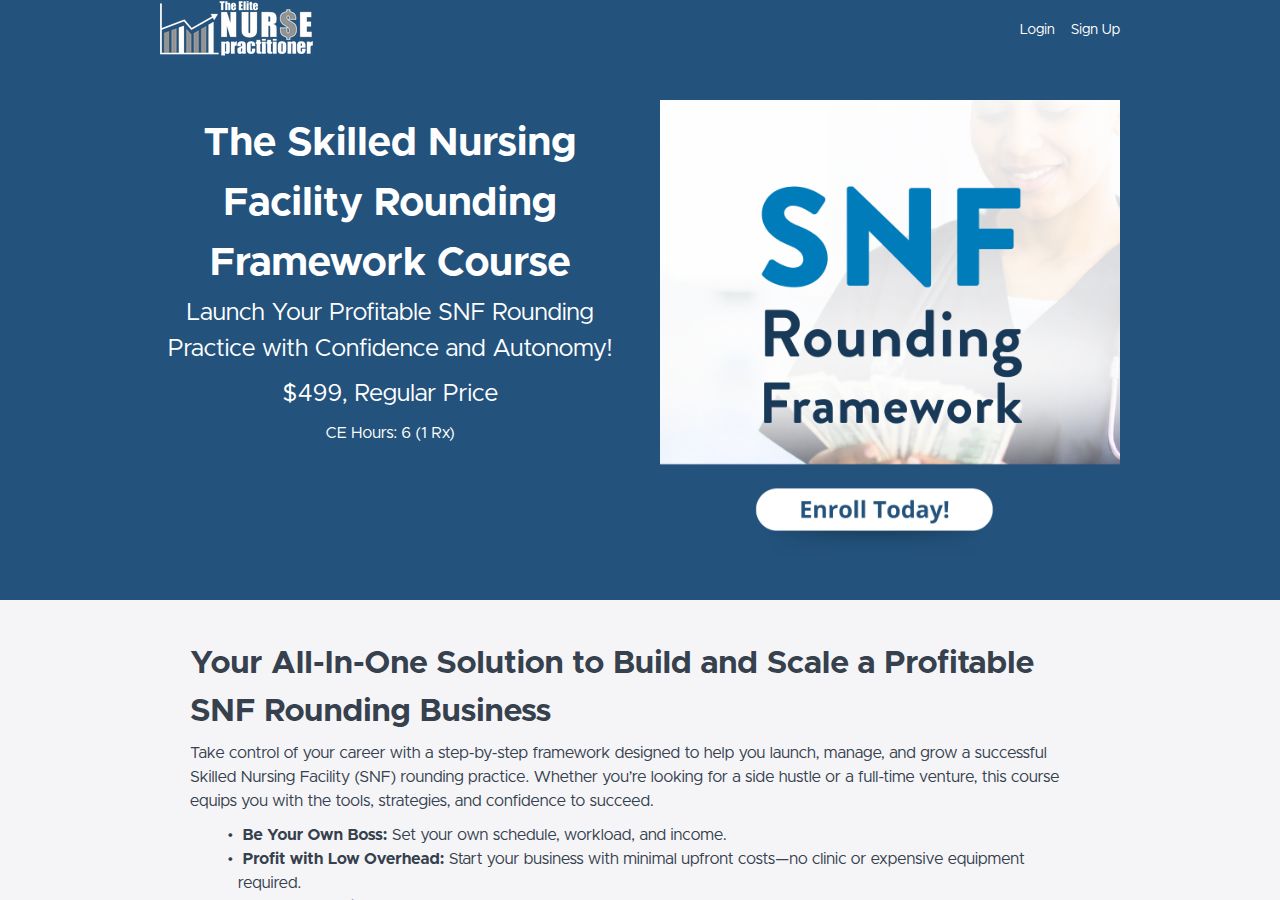
Screenshot of original course page
Pending
Scan in progress
Piracy Threat Analysis
Clinical education courses priced at $499 represent high-value targets in the piracy ecosystem. EliteNP's SNF Rounding Framework sits in a niche where demand is steady but the buyer pool is relatively small — making each lost sale proportionally more damaging. Teachable's standard content delivery, while convenient, does not include enterprise-grade DRM protections, leaving video modules and downloadable frameworks vulnerable to screen recording and file sharing. Healthcare professionals often share resources within facility networks and peer groups, creating organic distribution channels that can quickly amplify unauthorized sharing. The pending scan status means no piracy intelligence has been gathered yet. Given the $499 price point, this course falls into the premium bracket where piracy incentive is significant — potential pirates save substantially by accessing it for free. EliteNP should consider watermarking clinical worksheets and framework documents, implementing drip content delivery rather than bulk access, and monitoring nursing forums and Facebook groups where SNF clinicians frequently exchange resources. Requesting a full piracy scan through CoursePiracy would establish a baseline threat assessment before unauthorized copies potentially surface.
Priced at $499, this course is in a high-risk bracket. Courses between $200-$500 are among the most frequently pirated — the price is high enough to attract pirates but common enough to have significant demand.
Teachable courses carry a HIGH overall piracy risk. The most common piracy sources for Teachable content include Telegram groups, Torrent sites, Google Drive shares, Course dump sites. On average, pirated copies of Teachable courses appear 2-4 weeks after launch.
Known Teachable Vulnerabilities
- •No native DRM — course videos can be screen-captured or downloaded with browser extensions
- •Direct video URLs sometimes exposed in page source code, allowing direct downloads
- •Wistia-hosted videos can be ripped with third-party tools that bypass the embedded player
- •Account sharing is difficult to detect without session monitoring
Price Context
At $499, this course is in the top 18% of Teachable courses we monitor — placing it in the Mid-Range price tier.
Mid-range courses between $200–499 see consistent piracy activity. This is the most common price point for courses appearing on file-sharing platforms.
Online Education Piracy Intelligence
Healthcare and clinical education occupies a moderate-to-high risk position in the piracy landscape. While the audience is more professional and ethically aware than some niches, the high cost of continuing education creates strong financial motivation for unauthorized sharing. Nursing-specific content tends to circulate through closed Facebook groups, WhatsApp chats, and facility-internal file shares rather than public torrent sites, making detection more challenging. Compared to general business or marketing courses, clinical education piracy is harder to find via standard search dorks but no less damaging per incident. The SNF subspecialty narrows the market further, meaning even a handful of pirated copies can meaningfully erode revenue for creators like EliteNP.
Teachable Security Assessment
Built-in Security
- ✓Login-required access for all course content
- ✓No native video download button
- ✓Content drip scheduling to limit access
- ✓Student session management
- ✓Custom domain with SSL
Limitations
- ✗No DRM or video encryption
- ✗No watermarking built-in (requires third-party tools)
- ✗No download detection or alerting
- ✗Screen recording cannot be prevented
- ✗Limited concurrent session controls
Keep Your Course Protected
Teachable-Specific Protection Steps
- 1.Enable Teachable's built-in content drip to limit how much content is accessible at once
- 2.Use watermarked videos with student name or email overlay on each lesson
- 3.Set up IP access restrictions in your school's security settings
- 4.Limit concurrent login sessions to prevent credential sharing
- 5.Disable PDF downloads for sensitive materials — use in-browser viewing only
Frequently Asked Questions
How do I know if "The Skilled Nursing Facility (SNF) Rounding Framework for Clinicians" is pirated?▾
What platforms do pirates use for Teachable courses?▾
How much revenue can piracy cost for a $499 course?▾
How common is piracy for Teachable courses?▾
What piracy sources target Teachable courses the most?▾
Can Teachable's built-in protections prevent piracy?▾
Monitor "The Skilled Nursing Facility (SNF) Rounding Framework for Clinicians"
Your course is safe for now, but piracy can appear at any time. Set up monitoring to get alerted immediately.