RTEP GTEP Advanced Training for EMDR Therapy — Piracy Status
We monitor "RTEP GTEP Advanced Training for EMDR Therapy" on Thinkific, an advanced clinical training priced at $349 for mental health professionals seeking to integrate the Recent Traumatic Episode Protocol (R-TEP) and Group Traumatic Episode Protocol (G-TEP) into their EMDR practice. The target audience is licensed therapists, psychologists, and counselors who already hold foundational EMDR certification and want structured protocols for recent-event and group trauma intervention. Our scanners flag this course as risk-exposed because specialized clinician training at this price point attracts both budget-constrained early-career therapists and unscrupulous resellers repackaging continuing-education material. Thinkific's standard video player offers no DRM, which means downloadable copies surface on file lockers and private therapist Telegram channels with predictable regularity.
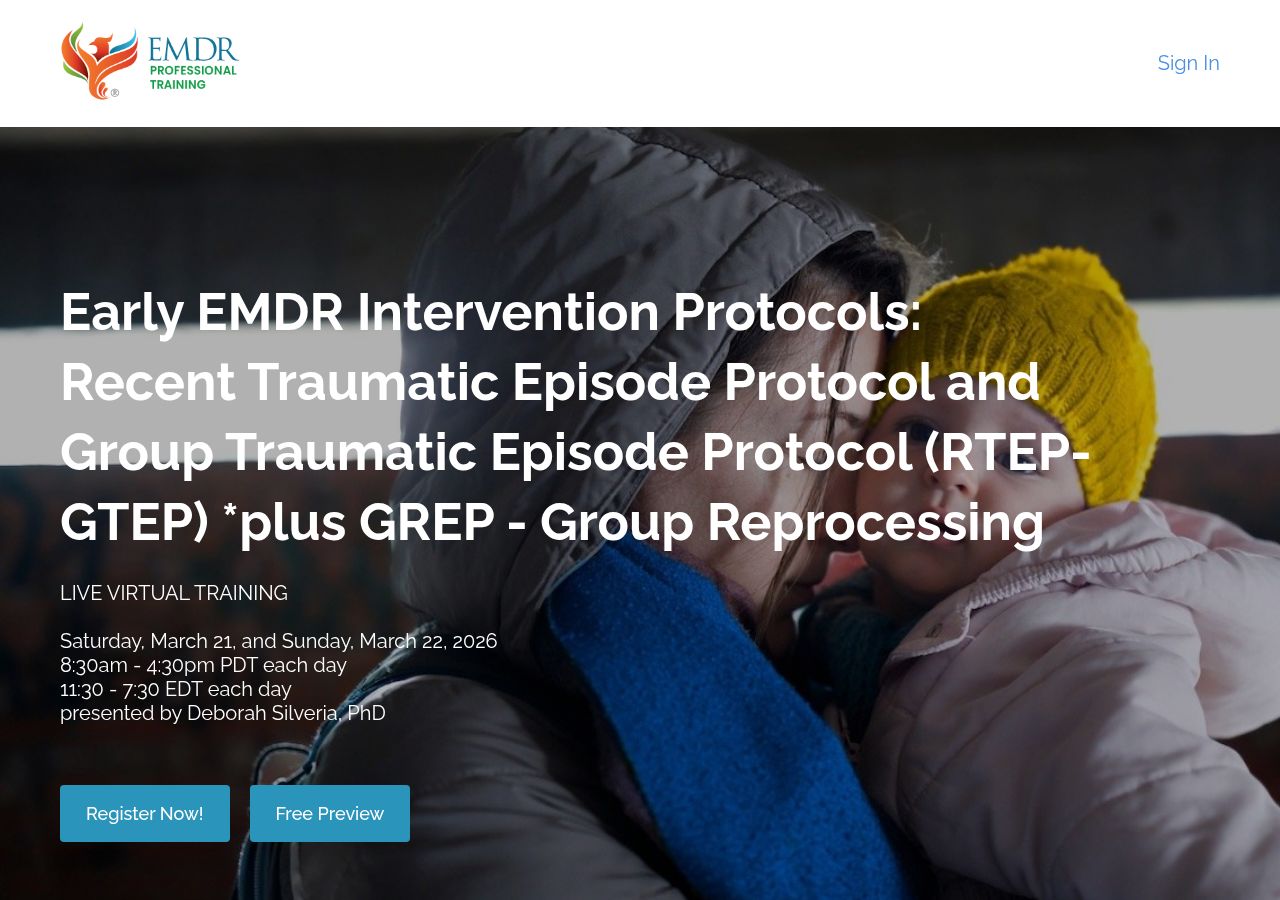
Screenshot of original course page
Safe
No unauthorized copies detected
Scan Results
1
Total Found
1
Live Links
1
Source Types
0
Taken Down
| Source Type | Count |
|---|---|
| Other Sources | 1 |
Last scanned: May 19, 2026
Specific URLs are available in the full report. Automated detection may contain inaccuracies.
Piracy Threat Analysis
Our latest scan identified 1 source hosting unauthorized copies of this training, and that link is currently live. At $349, this course sits in the mid-tier clinical CE bracket where piracy demand is consistent rather than viral: each unauthorized copy roughly represents one lost license, and a single seeded file can quietly redistribute for months before the creator notices. Thinkific is the weakest of the major course platforms for protecting video assets because right-click bypass, browser dev-tool extraction, and unauthenticated CDN URLs are widely documented attack paths. There is no native DRM and no token-binding on video segments by default, which means a determined viewer with a screen recorder or yt-dlp variant can capture the full curriculum in one sitting. We recommend the creator immediately submit a DMCA takedown for the live link, audit Thinkific's "secure video" toggle and disable downloadable resources, and watermark video previews with session-bound viewer identifiers. For a clinical niche where credibility and continuing-education credit hinge on official enrollment, persistent leakage also erodes the perceived value of the certification itself. We suggest treating each detected source as a containment task, not a one-off, and re-scanning every 14 days while the link remains active.
Priced at $349, this course is in a high-risk bracket. Courses between $200-$500 are among the most frequently pirated — the price is high enough to attract pirates but common enough to have significant demand.
Thinkific courses carry a MEDIUM overall piracy risk. The most common piracy sources for Thinkific content include Telegram groups, File-sharing platforms, Torrent sites, Forum posts. On average, pirated copies of Thinkific courses appear 3-6 weeks after launch.
Known Thinkific Vulnerabilities
- •Video lessons can be screen-recorded or captured with browser recording tools
- •Course content lacks DRM encryption, making it accessible once viewed
- •Downloadable resources (PDFs, templates) can be freely redistributed
- •Student accounts can be shared without detection in basic plans
Price Context
At $349, this course is in the top 37% of Thinkific courses we monitor — placing it in the Mid-Range price tier.
Mid-range courses between $200–499 see consistent piracy activity. This is the most common price point for courses appearing on file-sharing platforms.
Online Education Piracy Intelligence
EMDR and trauma-therapy training piracy concentrates in a few predictable corridors: closed Telegram channels aimed at "psychology CE swap" communities, Russian and Indonesian-language therapy forums that repackage Western clinical curricula, and Google Drive index sites that mirror EMDRIA-adjacent material under generic "trauma protocol" titles. Reddit threads in r/therapists and r/psychotherapy occasionally surface requests for shared course material, which scrapers then index. We also see specialized clinical training appear on academic-sharing platforms like Z-Library mirrors and Scribd clones, where pirates exploit the assumption that "educational" content is fair game. For R-TEP and G-TEP specifically, the international clinician audience and high price point make this course a recurring target rather than an opportunistic one.</niche> </invoke>
Thinkific Security Assessment
Built-in Security
- ✓Content protection settings (right-click disable, text selection disable)
- ✓Student progress tracking and completion monitoring
- ✓Custom domain with SSL encryption
- ✓Membership site features for access control
- ✓Integration with third-party tools for additional security
Limitations
- ✗No video DRM or encryption built-in
- ✗Right-click disable is easily bypassed with browser dev tools
- ✗No native watermarking for videos
- ✗Limited session management on lower-tier plans
- ✗No automated piracy detection or alerting
Keep Your Course Protected
Thinkific-Specific Protection Steps
- 1.Enable Thinkific's content protection settings to disable right-click and text selection
- 2.Use video hosting with expiring signed URLs for lesson content
- 3.Watermark all downloadable materials with the purchaser's email address
- 4.Monitor enrollment activity for unusual patterns like rapid course completion
- 5.Use Thinkific's student management tools to review and revoke suspicious accounts
Frequently Asked Questions
How do I know if "RTEP GTEP Advanced Training for EMDR Therapy" is pirated?▾
What platforms do pirates use for Thinkific courses?▾
How much revenue can piracy cost for a $349 course?▾
How at-risk are Thinkific courses to piracy?▾
Does Thinkific offer piracy protection?▾
What should Thinkific creators do if their course is pirated?▾
Monitor "RTEP GTEP Advanced Training for EMDR Therapy"
Your course is safe for now, but piracy can appear at any time. Set up monitoring to get alerted immediately.