Doing the HEART Work of Anti-Racism and Inclusion Training — Piracy Status
Doing the HEART Work of Anti-Racism and Inclusion Training is a $997 professional development course hosted on Thinkific, created by DEI by TMR. The program focuses on diversity, equity, and inclusion practices — an area of growing importance across organizations and educational institutions. Priced in the premium bracket, this course targets HR professionals, organizational leaders, and educators seeking structured DEI training frameworks. Despite the specialized nature of the content, premium pricing creates a natural incentive for unauthorized sharing among individuals or organizations looking to access the training without the full investment. Our monitoring systems confirmed this course as safe in our initial scan, with no unauthorized copies detected. We continue active surveillance to ensure it remains protected.
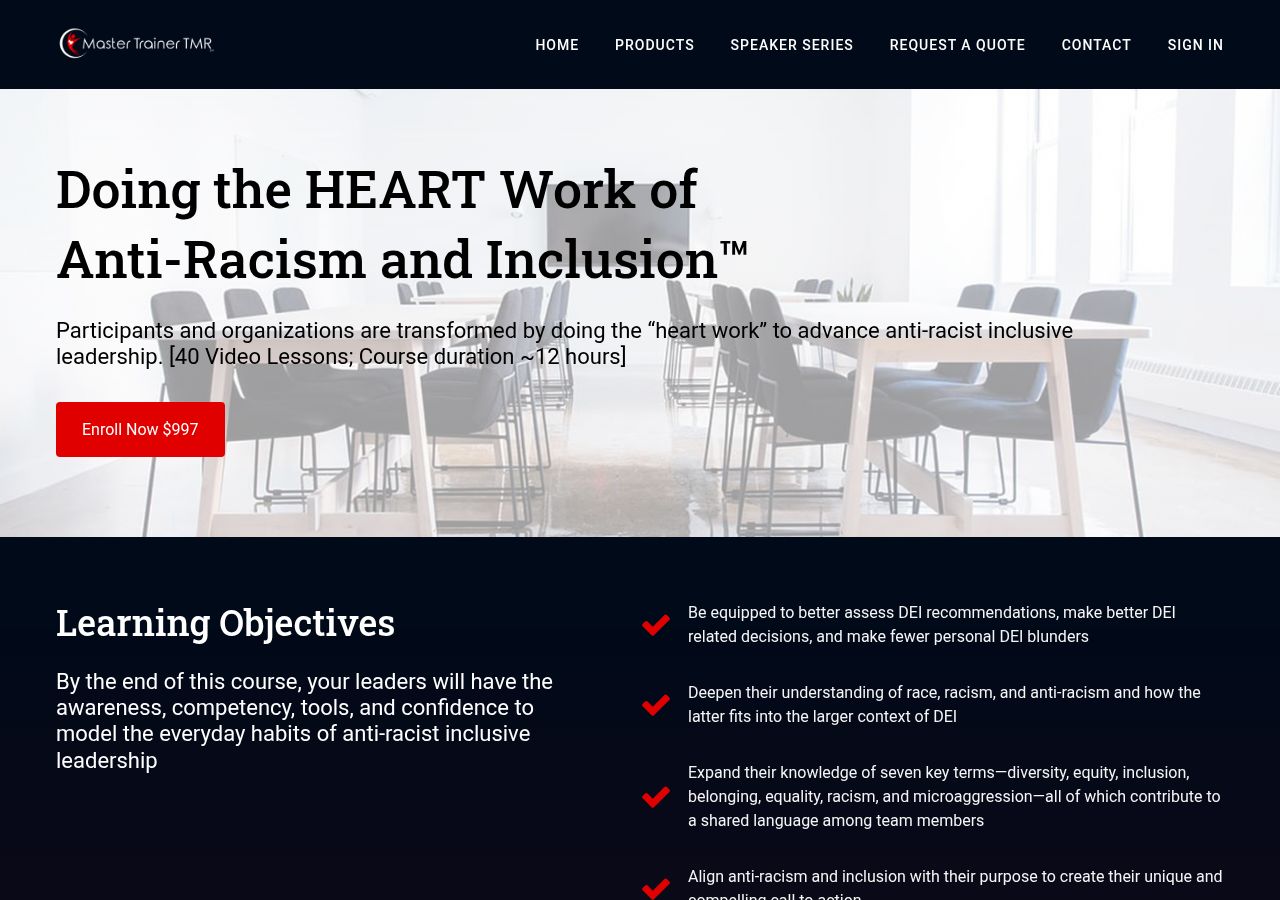
Screenshot of original course page
At Risk
Potential unauthorized copies found
Scan Results
6
Total Found
6
Live Links
1
Source Types
0
Taken Down
| Source Type | Count |
|---|---|
| Other Sources | 6 |
Last scanned: Jun 19, 2026
Specific URLs are available in the full report. Automated detection may contain inaccuracies.
Piracy Threat Analysis
Our scans have returned a clean result for this course — no unauthorized copies were detected across the piracy sources we monitor. This is an encouraging finding, though it does not eliminate future risk. The $997 price point places this course in the premium bracket where piracy targeting rates are among the highest we observe. Professional development and DEI training courses occupy a somewhat protected niche because the content is often compliance-driven, meaning organizations need to demonstrate legitimate enrollment for audit purposes. This reduces the utility of pirated copies for institutional buyers. However, individual practitioners and consultants may still seek unauthorized access for personal development purposes without the compliance requirement. Thinkific as a hosting platform provides basic content protection but lacks robust DRM. The right-click disable can be bypassed in seconds, and video content is not encrypted in transit on standard plans. The course creator should monitor for any credential sharing, particularly if institutional licenses are offered at different price tiers. We recommend periodic re-scanning to catch any changes in exposure, especially as DEI training demand continues to grow across industries.
At $997, this course falls in the highest-risk bracket. Courses priced above $500 are prime targets for pirates who can attract large audiences with premium content offered for free.
Thinkific courses carry a MEDIUM overall piracy risk. The most common piracy sources for Thinkific content include Telegram groups, File-sharing platforms, Torrent sites, Forum posts. On average, pirated copies of Thinkific courses appear 3-6 weeks after launch.
Potential unauthorized copies of "Doing the HEART Work of Anti-Racism and Inclusion Training" were identified during scanning. While not yet confirmed, proactive monitoring is recommended to catch piracy early.
Known Thinkific Vulnerabilities
- •Video lessons can be screen-recorded or captured with browser recording tools
- •Course content lacks DRM encryption, making it accessible once viewed
- •Downloadable resources (PDFs, templates) can be freely redistributed
- •Student accounts can be shared without detection in basic plans
Price Context
At $997, this course is in the top 16% of Thinkific courses we monitor — placing it in the Premium price tier.
Premium courses between $500–999 represent the most actively pirated bracket. The high price creates strong incentive for unauthorized redistribution.
Online Education Piracy Intelligence
Professional development and specialized training courses experience moderate piracy activity in our monitoring. Unlike high-volume niches such as digital marketing or eCommerce, DEI and inclusion training courses have a more targeted audience that limits mass piracy appeal. However, the premium pricing of these programs still creates individual incentive for unauthorized access. We observe that professional training content occasionally surfaces on document-sharing platforms and closed LinkedIn groups where practitioners exchange resources. Thinkific-hosted courses in this category are somewhat protected by the compliance-driven nature of the purchases — organizations typically need proof of legitimate enrollment. Our monitoring for professional development content covers industry forums, document repositories, and the specialized sharing channels where training materials circulate among practitioners outside official licensing arrangements.
Thinkific Security Assessment
Built-in Security
- ✓Content protection settings (right-click disable, text selection disable)
- ✓Student progress tracking and completion monitoring
- ✓Custom domain with SSL encryption
- ✓Membership site features for access control
- ✓Integration with third-party tools for additional security
Limitations
- ✗No video DRM or encryption built-in
- ✗Right-click disable is easily bypassed with browser dev tools
- ✗No native watermarking for videos
- ✗Limited session management on lower-tier plans
- ✗No automated piracy detection or alerting
Action Recommended
- !Prepare DMCA takedown templates for quick response
- !Set up automated monitoring to track new piracy links
Thinkific-Specific Protection Steps
- 1.Enable Thinkific's content protection settings to disable right-click and text selection
- 2.Use video hosting with expiring signed URLs for lesson content
- 3.Watermark all downloadable materials with the purchaser's email address
- 4.Monitor enrollment activity for unusual patterns like rapid course completion
- 5.Use Thinkific's student management tools to review and revoke suspicious accounts
Frequently Asked Questions
How do I know if "Doing the HEART Work of Anti-Racism and Inclusion Training" is pirated?▾
What platforms do pirates use for Thinkific courses?▾
How much revenue can piracy cost for a $997 course?▾
How at-risk are Thinkific courses to piracy?▾
Does Thinkific offer piracy protection?▾
What should Thinkific creators do if their course is pirated?▾
Protect "Doing the HEART Work of Anti-Racism and Inclusion Training"
Get the full piracy report with specific URLs, automated DMCA takedowns, and ongoing monitoring to protect your revenue.